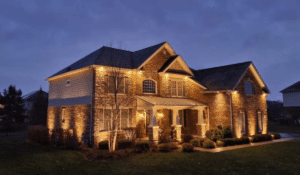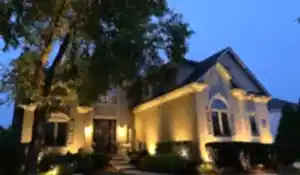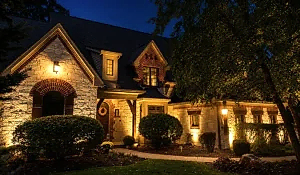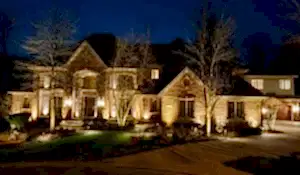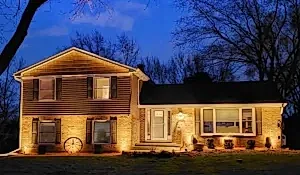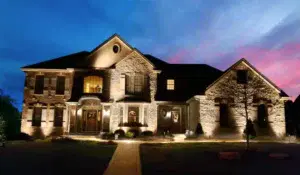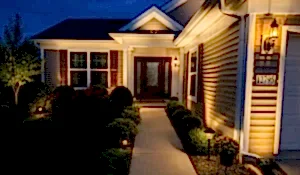

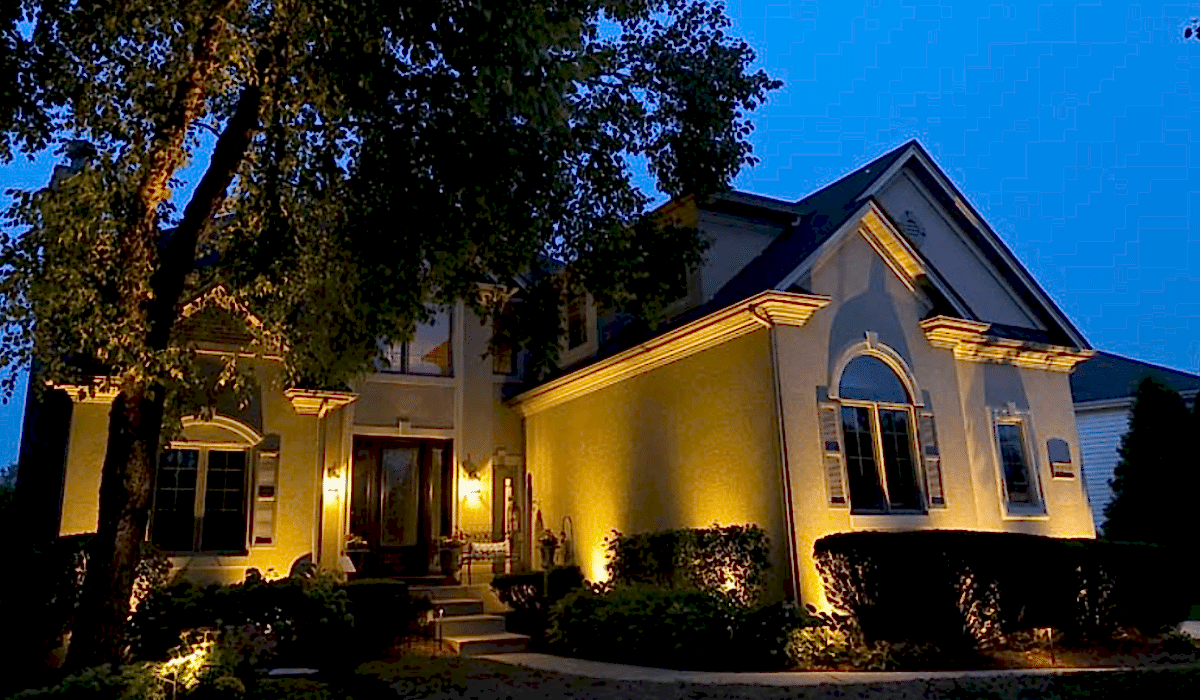
Fall is an ideal time for landscape lighting design projects because earlier sunsets reveal how a property actually functions after dark. Dark paths, poorly lit entrances, hidden landscaping, and overlooked architectural features become easier to identify while much of the landscape remains visible.
For more than 25 years, The Illuminators Outdoor Lighting has designed outdoor lighting throughout Chicagoland and Northern Illinois. Our landscape lighting design and installation work considers how the entire property should look and function after sunset.
The best place to begin is not with a fixture, but with what changes after dark. A fall walkthrough makes those changes easier to recognize.
What Homeowners Notice About Their Property in Fall That They Miss in Summer
Long summer days can hide lighting problems that become obvious once darkness arrives earlier. A fall walkthrough can reveal:
- Dark pathways and steps: Turns, transitions, or changes in height become harder to distinguish.
- Underlit landscaping: Trees, planting beds, or focal points disappear after sunset.
- Poor visibility around entrances: The route from the driveway or front walk to the door becomes harder to follow visually.
- Hidden architectural features: Stone, brick, columns, and textured surfaces lose depth after dark.
These signs may also show that an existing system no longer fits the property. Mature plants can block beams, fixtures can shift, and outdoor spaces can change over time.
The same evaluation applies to a driveway lighting installation. Lighting should respond to how vehicles and people move between the driveway, walks, entrance, and home. If that route becomes poorly defined after sunset, it may be one of several fall lighting improvements worth evaluating.
Why Fall Creates Better Design Perspective for Landscape Lighting Design
Fall gives homeowners three useful conditions at the same time:
- Earlier darkness reveals lighting gaps. Dark paths, missing focal points, poorly defined entrances, and uneven brightness become easier to identify during normal evening hours.
- Landscaping is still visible. Trees, planting beds, architecture, and outdoor spaces provide context for judging how illuminated areas should relate.
- Outdoor evaluation may be more practical. When fall weather is comfortable, homeowners can evaluate the property after sunset from the places they actually use.
That context is useful when planning custom landscape lighting. A mature tree might benefit from uplighting, while a textured wall may respond better to grazing. A path or step has a different purpose because people need to recognize the route and changes in height.
Fall also provides a planning window before spring growth and heavier outdoor use return. Identifying priorities now gives homeowners time to think through the design instead of first recognizing lighting gaps when patios, gardens, and gathering areas become active again.
The Difference Between Installing Fixtures and Designing Lighting
Installing fixtures answers “Where can a light go?” Lighting design asks “What should this part of the property look like or help people do after dark?” That difference shifts the focus from fixture count to strategy, placement, direction, balance, and viewing angle.
Our team works on systems we did not originally install, including systems with design or installation problems that need correction. That experience reinforces an important point: a dark area does not automatically need another fixture. Poor aim, plant growth, a blocked beam, placement, or the original layout can produce the same symptom.
Different techniques solve different design problems:
- Uplighting: When homeowners need outdoor uplighting services for trees or architecture, the result depends on placement, beam direction, viewing angle, and the feature being illuminated.
- Moonlighting: Light directed downward from above creates a different effect from ground-level uplighting.
- Grazing: Light placed close to stone or brick emphasizes surface texture.
- Path and step lighting: Light defines routes, turns, and changes in height.
Visual hierarchy determines where attention goes first. A mature tree or entrance may become a focal point while nearby plantings stay softer so they support rather than compete with it.
Property flow and nighttime experience consider how illuminated areas connect from the driveway, walkways, outdoor living areas, and views from inside the home. The result should feel intentional rather than like unrelated bright spots.
Using light only where it serves a purpose is consistent with responsible outdoor lighting principles. Our outdoor landscape lighting professionals apply that principle when evaluating new and existing systems.
Mature landscaping, blocked beams, poor aiming, fixture condition, placement, and system age can contribute to outdated landscape lighting problems. Identifying the cause should come before choosing the correction.
Areas That Benefit Most From Professional Lighting Design
Effective residential outdoor lighting design considers how the main areas of a property work together after dark:
- Architectural facades: Select important details instead of lighting every surface equally.
- Pathways: Define turns, transitions, and changes in height.
- Driveways: Connect the arrival route visually with walks, the entrance, and the home.
- Garden features: Decide which trees, beds, and focal points should remain visible.
- Outdoor living spaces: Account for where people sit, gather, cook, and move.
Good design also means deciding what not to illuminate. The National Park Service’s outdoor lighting principles emphasize whether light is needed, where it should be directed, and how much is appropriate.
How Professional Designers Build a Lighting Plan
Our outdoor lighting design services begin with the homeowner’s goals and what the property reveals after dark. Those observations become a coordinated plan:
- Assess the property. Architecture, landscaping, walking routes, existing lighting, dark areas, and viewing angles establish priorities.
- Build the lighting in layers. Different techniques help architecture, landscaping, walking areas, and outdoor spaces work together.
- Match fixtures to the job. Placement, beam direction, construction, controls, and the intended effect guide fixture selection.
- Plan for future needs. Landscape growth, possible expansion, equipment capacity, and changing outdoor spaces can affect today’s decisions.
LED technology can support a more efficient system, a benefit reflected in U.S. Department of Energy reporting on LED adoption and energy savings. Efficiency alone does not make a design successful. An efficient fixture can still be poorly placed or badly aimed.
An existing system may not require complete replacement. Depending on its condition, outdoor lighting retrofits and upgrades can include fixture relocation, control changes, equipment updates, or system expansion.
Designing for All Four Seasons
A Northern Illinois landscape changes throughout the year, so a lighting plan should account for those changes:
- Winter visibility: Reduced foliage can make architecture, hardscape, walkways, and tree structure more prominent.
- Spring growth: New foliage can surround fixtures or block beams.
- Summer entertaining: Patios, decks, and gathering areas may see more evening use.
- Fall visibility: Earlier darkness can expose poorly defined steps, paths, driveway transitions, and entrances.
A four-season design avoids treating today’s landscape as permanent. Seasonal growth and changing foliage can influence fixture placement and beam direction throughout our Chicagoland service areas.
Common Questions About Fall Lighting Design
Additional equipment, maintenance, and repair topics are covered in our outdoor lighting FAQs.
Is fall better than spring for lighting design?
Fall can be especially useful because darkness arrives earlier while much of the landscape may still be visible. Spring can also work well, so the better season depends on the property and project goals.
What makes a custom lighting design different?
A custom design responds to the home’s architecture, landscaping, walking routes, outdoor spaces, existing system, viewing angles, and desired nighttime effects instead of repeating the same fixture layout from one property to another.
How long does the design process take?
Timing depends on the property and project scope. Mature landscaping, several outdoor spaces, or an existing system that needs evaluation can introduce more design decisions.
Can lighting plans be expanded later?
Some systems can be expanded, but transformer capacity, wiring, controls, fixture placement, and the existing layout determine what is practical. Considering expansion early can preserve options for future additions.
Look at Your Property Differently After Sunset
Before making decisions about landscape lighting design, walk the property after sunset and ask:
- Where do you hesitate? Check paths, steps, entrances, and driveway transitions.
- What disappears? Notice trees, landscaping, architecture, and outdoor spaces that lose their presence at night.
- What feels out of balance? Look for areas that are too bright, too dark, poorly aimed, or disconnected.
The answers help define the problems a lighting plan needs to solve.
When comparing providers, homeowners searching for the best outdoor lighting design companies can look beyond fixture count and product selection. A more useful comparison is whether the designer considers architecture, landscaping, walking routes, viewing angles, existing equipment, seasonal changes, and future needs as one connected plan.
Plan Your Outdoor Lighting Turn Your Fall Observations Into a Lighting DesignDark paths, disappearing features, and uneven lighting show where attention is needed, but they do not tell you which fixtures to add. The practical next step is to decide what should work or look better after dark before deciding how the lighting should achieve it. We can use those observations to develop a design around your property, priorities, and nighttime use. Bring those observations into the conversation so we can discuss what the lighting should accomplish.
|